Why Pec Minor Tightness Causes Neck Pain
The Role of the Pectoralis Minor
The pectoralis minor is a small muscle located beneath the larger chest muscles. It connects the ribs to the front of the shoulder blade and helps control the position of the shoulder blade during movement.
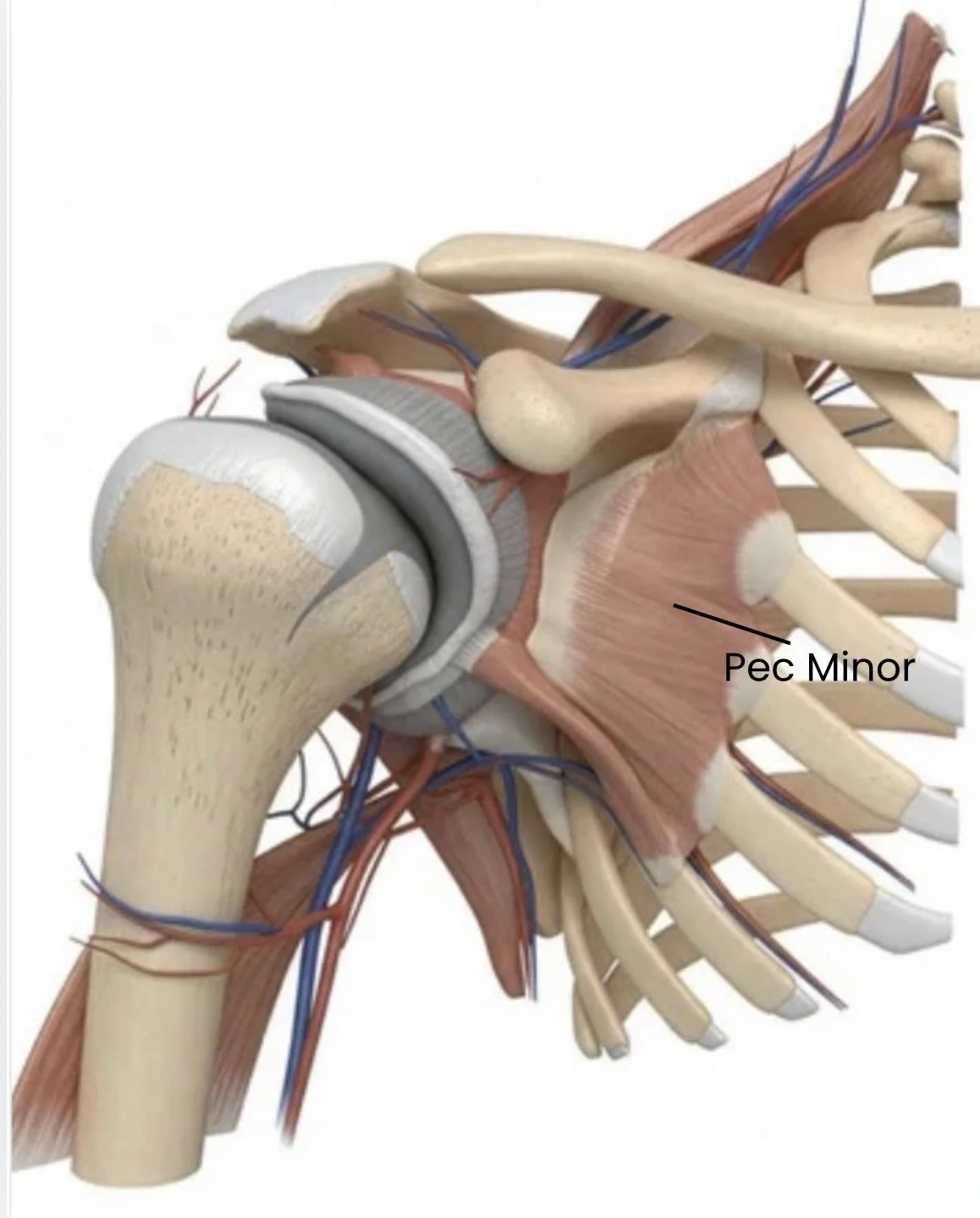
Illustration showing the pectoralis minor attaching from ribs 3-5 to the coracoid process, a small hook-like part of the shoulder blade. When this muscle tightens, it can pull the shoulder forward andinfluence neck posture.
Although it is not often discussed outside of clinical settings, this muscle can play a significant role in neck and shoulder discomfort.
When people spend many hours sitting at a desk, the shoulders naturally begin to round forward and the chest muscles gradually tighten. Over time, this creates a pattern where the muscles of the upper back become lengthened and overworked while the muscles of the chest shorten.
As the pectoralis minor tightens, it pulls the shoulder blade forward and slightly downward. This altered shoulder position changes how the muscles of the neck must function in order to support the head.
Many professionals in Uptown Charlotte, particularly those working in finance, banking, accounting, technology, and other desk-based professions, develop this type of muscular pattern after long hours of computer work.
How Chest Tightness Affects the Neck

Forward head posture increases the load placed on the cervical spine as the head tilts forward. Based on research by Kenneth K. Hansraj, Assessment of Stresses in the Cervical Spine Caused by Posture and Position of the Head, Surgical Technology International (2014).
The neck and shoulders function together as part of a connected mechanical system. When the shoulders move forward, the head often shifts forward as well.
This pattern is commonly referred to as forward head posture, a postural distortion frequently associated with prolonged computer work.
Forward head posture places additional strain on the muscles of the neck because those muscles must work harder to support the weight of the head. Research examining the effects of forward head posture on the cervical spine has shown that as the head moves forward relative to the shoulders, the mechanical load placed on the neck increases significantly, often contributing to muscular fatigue and chronic neck discomfort.
Over time this can lead to muscular fatigue, tightness, and trigger point activity in the neck and upper back. Many people begin to experience symptoms such as:
• persistent neck tension
• stiffness when turning the head
• aching between the shoulder blades
From a neuromuscular therapy perspective, this pattern often involves both postural distortion and muscular imbalance, where shortened chest muscles combine with overworked upper back and neck muscles.
This pattern is frequently seen in desk workers who spend extended periods of time looking at computer screens.
Addressing the Full Pattern
Massage therapy can help address this issue by working with the entire muscular pattern rather than focusing only on the neck.
Both deep tissue massage and neuromuscular therapy can be effective in addressing the muscular tension associated with desk work.
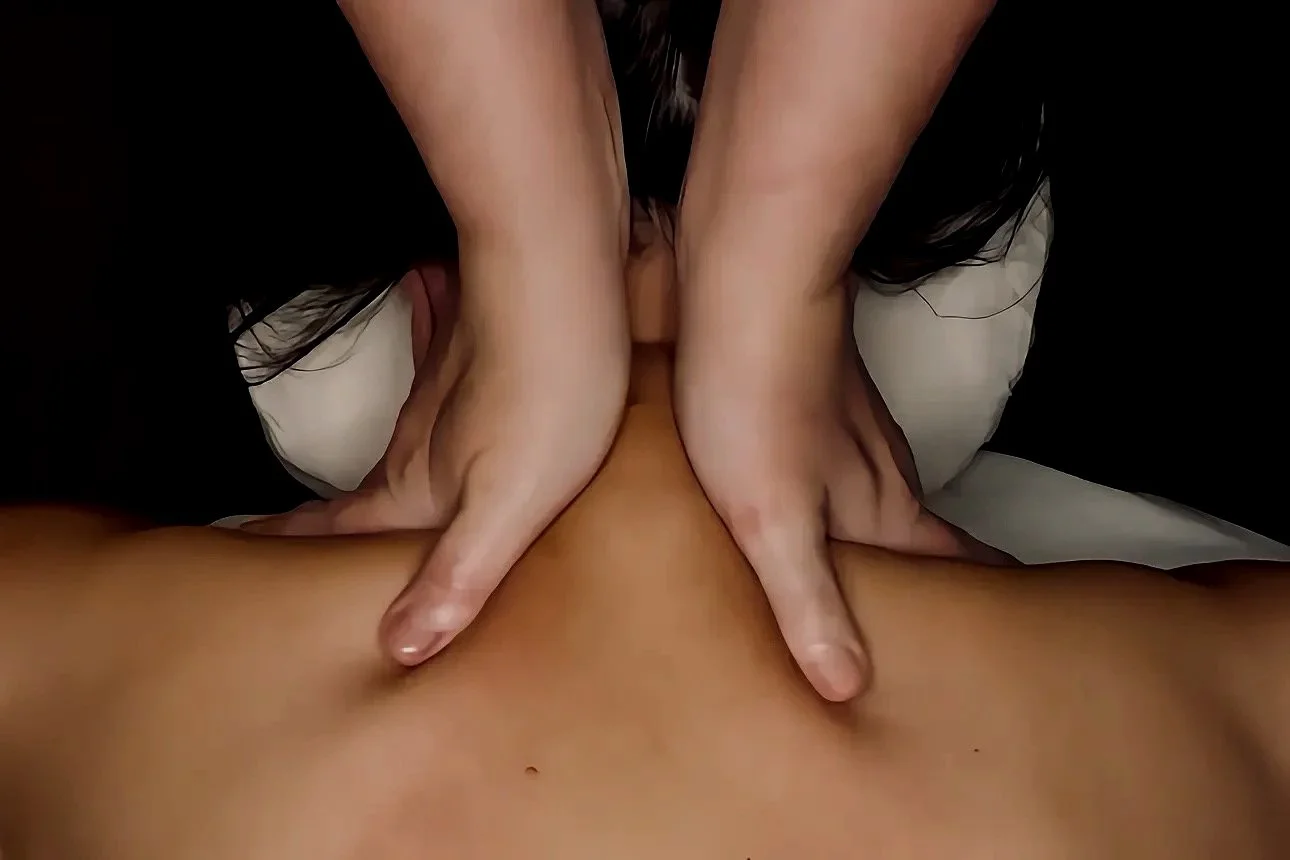
Hands-on neuromuscular therapy addressing tension patterns in the upper back and shoulders that commonly develop with prolonged desk posture.
Treatment often focuses on releasing tight chest muscles such as the pectoralis minor while also working with the muscles of the neck, shoulders, and upper back. As tension decreases in the chest, the shoulder blades can begin to return to a more balanced position along the rib cage.
For some people, massage therapy and physical therapy for shoulder tension may work excellent together because soft tissue restrictions through the chest and shoulders can exist alongside weakness, poor control, or reduced coordination through the upper back and shoulder blade muscles.
When the shoulders move closer to their natural alignment, the muscles of the neck no longer need to work as hard to stabilize the head.
Many desk workers notice that once this pattern begins to change, neck tension decreases and movement becomes easier. For many individuals experiencing persistent neck tension related to desk work, deep tissue massage in Charlotte can be particularly helpful in addressing the deeper muscular restrictions that develop in the chest, shoulders, and upper back. By working with the underlying tension patterns rather than only the surface muscles, treatment can help restore more balanced movement throughout the neck and shoulder region.
Small Changes That Can Help During the Workday

Small ergonomic adjustments during the workday can reduce strain on the neck and shoulders.
In addition to hands-on treatment, small adjustments during the workday can also reduce strain on the neck and shoulders.
Helpful changes may include:
• raising the monitor to eye level
• adjusting keyboard and mouse placement
• standing or walking periodically during the workday
• briefly stretching the chest and upper back muscles
These simple adjustments can help reduce the forward shoulder posture that often contributes to tightness in the pectoralis minor.
Long-Term Relief for Desk-Related Neck Pain

Forward shoulder posture and tight chest muscles often contribute to neck and upper shoulder discomfort.
For many people, neck discomfort is not caused by a single muscle but by a pattern that develops over time. When the chest, shoulders, and neck are addressed together, the body can gradually return toward a more balanced position.
Many clients who work long hours at desks find that once this pattern improves, they experience more lasting relief rather than temporary improvement.
For individuals experiencing persistent neck tension related to posture, targeted therapeutic massage for chronic muscle pain can help address the muscular patterns contributing to the discomfort.
FAQ: Pec Minor Tightness and Neck Pain
Can tight chest muscles cause neck pain?
Yes. Tight chest muscles such as the pectoralis minor can pull the shoulders forward. When the shoulders move forward, the neck muscles must work harder to support the head, which can lead to tension and discomfort.
What type of massage helps with desk-related neck pain?
Both deep tissue massage techniques and neuromuscular therapy can help address the muscular tension patterns associated with prolonged desk work. Treatment typically focuses on the chest, shoulders, neck, and upper back.
Why do desk workers often develop neck tension?
Desk work often involves long periods of sitting with the arms positioned in front of the body while looking at computer screens. Over time this posture can create muscular imbalances that contribute to neck and shoulder pain.
A Different Approach to Massage Therapy
Many large massage chains focus on monthly membership programs that encourage clients to return regularly for maintenance sessions. While this model can be helpful for relaxation, it often focuses on ongoing visits rather than addressing the underlying muscular patterns that contribute to pain.
At Key of Life Wellness and Massage in Charlotte, the goal is different. Rather than encouraging indefinite monthly sessions, treatment is designed to focus on the specific muscular patterns creating discomfort. Using targeted therapeutic techniques such as deep tissue massage and neuromuscular therapy, many clients begin to notice meaningful improvement within the first few sessions.
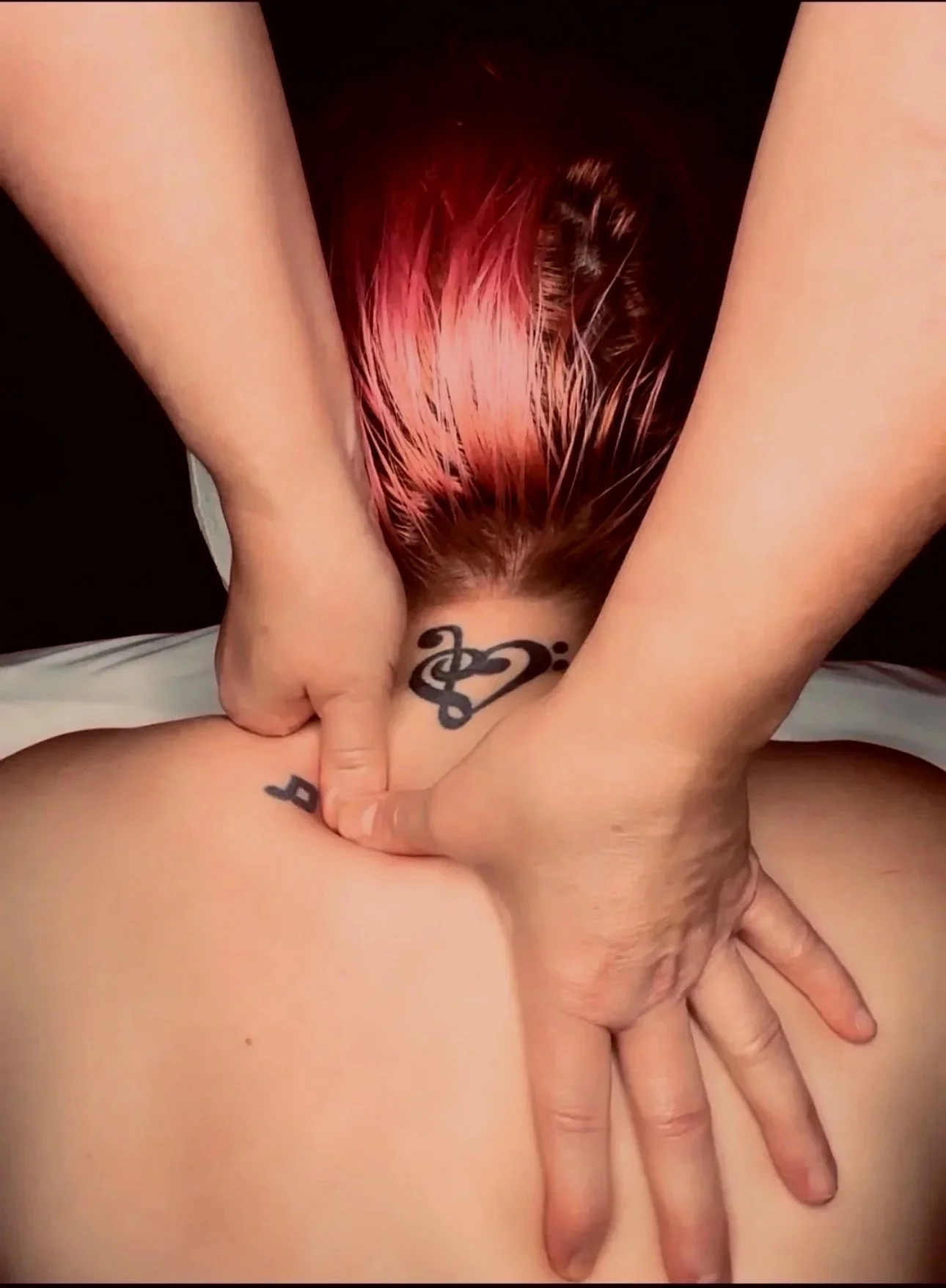
Targeted neuromuscular therapy addressing tension patterns in the upper back and shoulder region associated with desk-related posture.
In many cases, people experience noticeable relief in one to three sessions, depending on the condition and how long the problem has been present.
Instead of committing to a membership program, clients are free to decide what frequency works best for them. Some people return occasionally for maintenance, while others come back only when new tension develops.
Many clients also choose to use massage packages as a way to receive a discounted rate without committing to a membership program. Packages allow people to schedule a small series of sessions when they are first addressing a problem while still maintaining the freedom to book appointments whenever it works best for their schedule.
Unlike memberships, there is no recurring monthly charge and no pressure to schedule appointments within a specific time frame. Massage packages at Key of Life Wellness and Massage never expire, and they can also be shared with friends or family members if someone else would benefit from a session.
For many clients, packages simply provide an easy way to receive therapeutic massage at a lower rate while still maintaining the flexibility to use bodywork in whatever way supports their health and lifestyle best.
Deep Tissue and Neuromuscular Massage in Charlotte, NC
At Key of Life Wellness and Massage in Charlotte, Betsy Burkart NCLMBT #7141 specializes in therapeutic massage focused on addressing muscular patterns associated with chronic tension and postural imbalance.
Many desk workers throughout Charlotte, including professionals working in banking, finance, accounting, and technology, experience muscular pain related to long hours of computer work.

Many desk workers notice meaningful relief after targeted therapeutic massage addressing the muscular patterns created by prolonged computer work.
Deep tissue massage and neuromuscular therapy can help address these patterns by working with the muscles of the chest, shoulders, neck, and upper back.
If you are a experiencing ongoing neck tension, restricted movement, or persistent muscular discomfort, therapeutic massage may help restore more comfortable movement. New clients can learn more about available serves or schedule an appointment online.