Why Desk Workers Get Tight Calves, Heavy Legs, and Stiff Ankles from Sitting All Day
Why Desk Workers Often Feel Tightness, Heaviness, and Fatigue in the Lower Legs
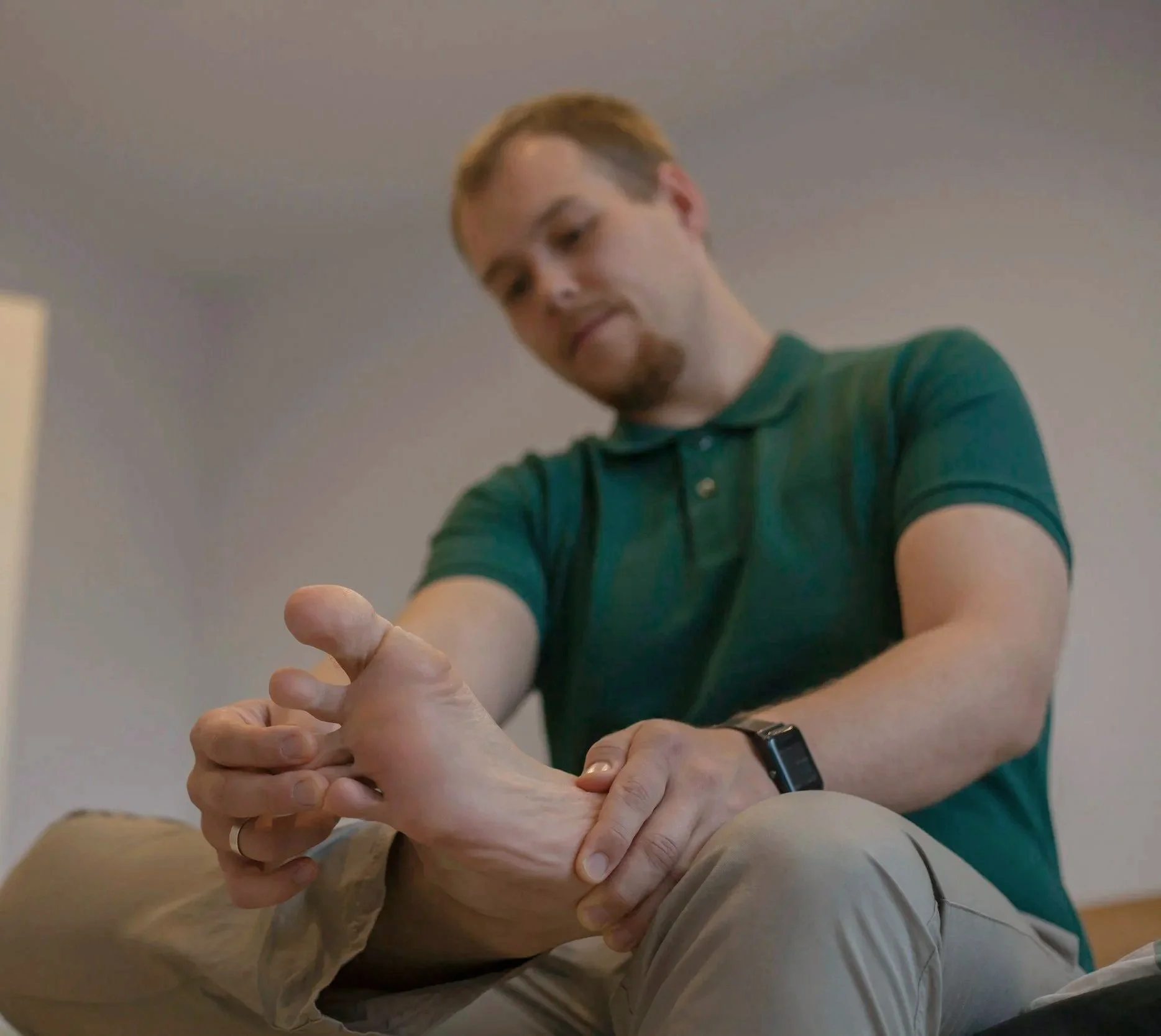
Long hours at a desk can affect more than the neck and low back. The calves, ankles, and feet can also become stiff after sitting too long.
Most desk workers expect tension to build in the neck, shoulders, or low back after sitting all day.
What many people do not expect is how much prolonged sitting can also affect the calves, ankles, and lower legs.
Over time, many people begin noticing:
tight calves
heavy or fatigued legs
stiffness in the ankles
legs that feel twitchy or difficult to get comfortable
soreness after long workdays
lower-body stiffness after sitting too long
This pattern is especially common in people spending long hours sitting at computers, bouncing between back-to-back Teams meetings, or staying stuck at a desk most of the workday without moving around very much.
By the end of the workweek, lower-leg stiffness can start affecting more than just the workday. Once you finally leave the office and want to enjoy your evening, walking around South End, meeting friends in Plaza Midwood, or heading out near Park Road and Montford can feel more like a chore than a fun Friday night. Your legs may feel heavy, tight, sore, or awkward, and even normal walking can feel harder than it should after sitting through another long week.
A lot of clients notice it most later in the afternoon when the legs start feeling unusually stiff, heavy, or tight after hours of barely getting up from the desk.
Why Sitting All Day Can Make the Calves Feel Tight and Overworked
Most people think of the calves as muscles mainly used for walking, exercise, or standing on the toes, but the calves also help support ankle movement, lower-leg circulation, and overall lower-body mobility throughout the day.
When someone stays seated for long periods, the ankles move less, the calf muscles stay relatively inactive, and the knees and hips remain bent for hours at a time. The feet and ankles also move through a much smaller range of motion than they would during a more active day.
Over time, that lack of movement can contribute to calf tightness, reduced ankle mobility, lower-leg fatigue, stiffness during walking, and tension through the feet and lower body.
Even though your calves are not actively working hard while sitting, they may still begin to feel overworked later in the day. When ankle movement is limited and your lower body stays in one position for hours, the calves can become stiff, underused, and less responsive. Then, when you finally stand up, walk, climb stairs, or run errands after work, your lower legs may have to work harder to move through a range they have not used much all day.
This does not mean your body is falling apart. In many cases, it means your lower legs have spent too much time in one position and not enough time moving through their normal range. A lot of people do not realize how little they are actually moving during the workday until the legs start feeling stiff, heavy, or tired by the afternoon.
Why Heavy Legs Can Happen When the Calves Stop Moving Enough
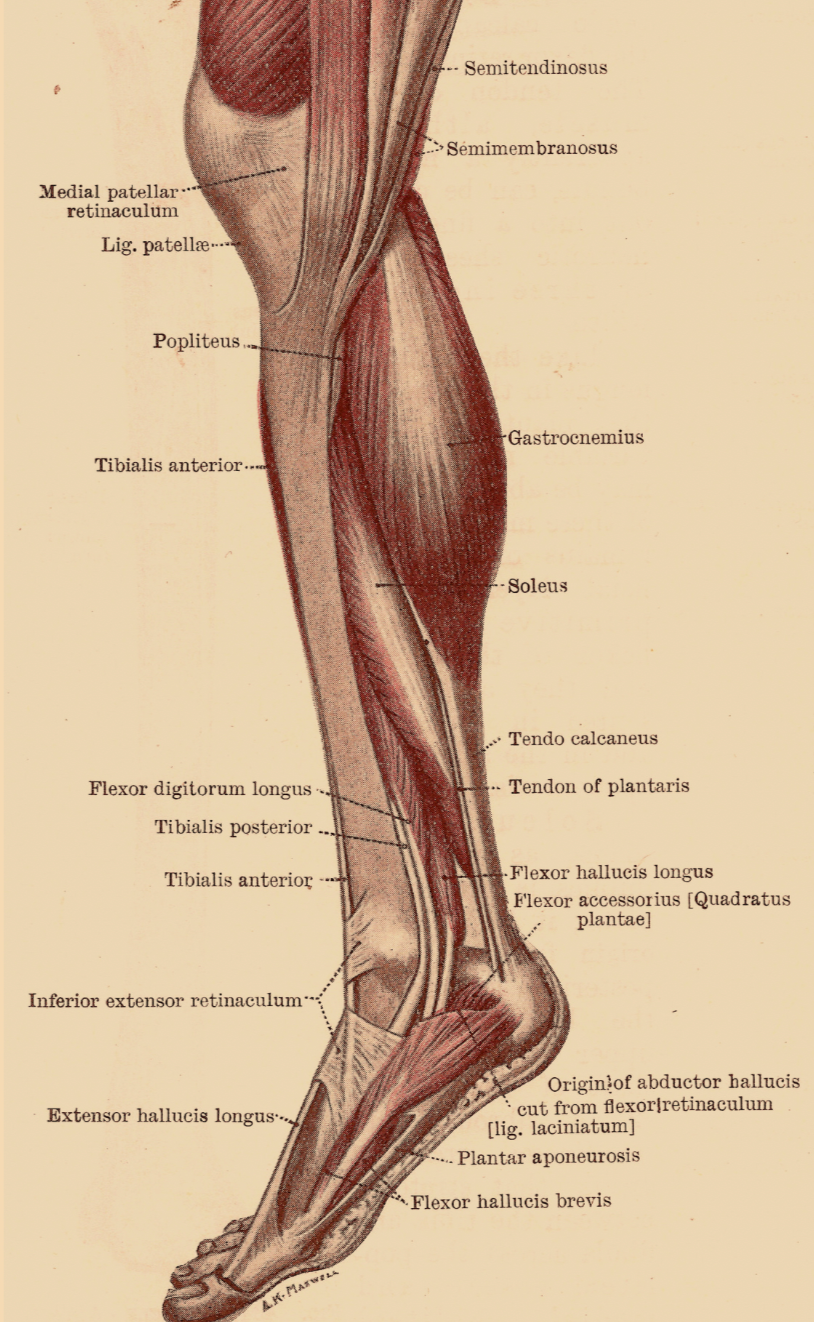
The calves and ankles help support lower-leg movement throughout the day. When they barely move for hours, the legs may feel heavy, tight, or tired.
The calf muscles help support circulation by assisting with venous return as the body moves throughout the day.
When movement becomes limited for long periods, many people begin noticing the legs feel:
sluggish
heavy
tight
stiff
fatigued by the end of the day
This is especially common in people spending hours alternating between desk work, meetings, emails, and long periods of uninterrupted sitting with very little movement in between.
A lot of clients tell me they do not even realize they have barely stood up all day until they finally get home and notice how stiff the entire lower body feels.
The calves are sometimes described as part of the body’s “muscle pump” or “second heart” because contraction and ankle movement help encourage fluid and blood flow back upward from the lower legs. When someone sits for hours with very little ankle movement, that pumping action is reduced. While prolonged sitting has also been studied in relation to blood clot risk, heavy legs after a workday do not automatically mean something serious is happening. More commonly, the lower legs may feel sluggish, full, tight, or tired because the ankles and calves have barely moved for hours.
How Tight Calves Can Affect the Ankles, Feet, Hips, and Low Back
Many people assume calf tightness is only a foot or ankle issue.
But over time, reduced movement and tension through the calves can start affecting movement higher up the body as well.
In many desk workers, calf tightness develops alongside:
glute weakness
reduced ankle mobility
stiffness throughout the lower kinetic chain
A lot of clients describe it as feeling like the entire lower body becomes tight at the same time after sitting too long.
That is one reason these prolonged sitting patterns often become more noticeable and frustrating over time.
Why Desk Work Can Also Lead to Stiff Ankles and Foot Tension
A lot of people do not immediately associate desk work with foot tension, but the feet and ankles are often part of the same prolonged sitting pattern.
When movement decreases throughout the day, the ankles and feet also stop moving through their normal range of motion as often.
Over time, many people begin noticing:
stiff ankles
tight arches
foot fatigue
soreness when standing up
tension through the bottoms of the feet
discomfort after long workdays in dress shoes or unsupportive footwear
I hear this a lot from office workers who spend most of the day sitting and then suddenly expect the feet and lower body to immediately tolerate walking, standing, errands, workouts, or long commutes afterward.
In many cases, the feet, calves, hips, and lower back are all reacting to the same prolonged sitting pattern together.
How Therapeutic Massage Can Help with Calf, Foot, and Lower-Leg Tension
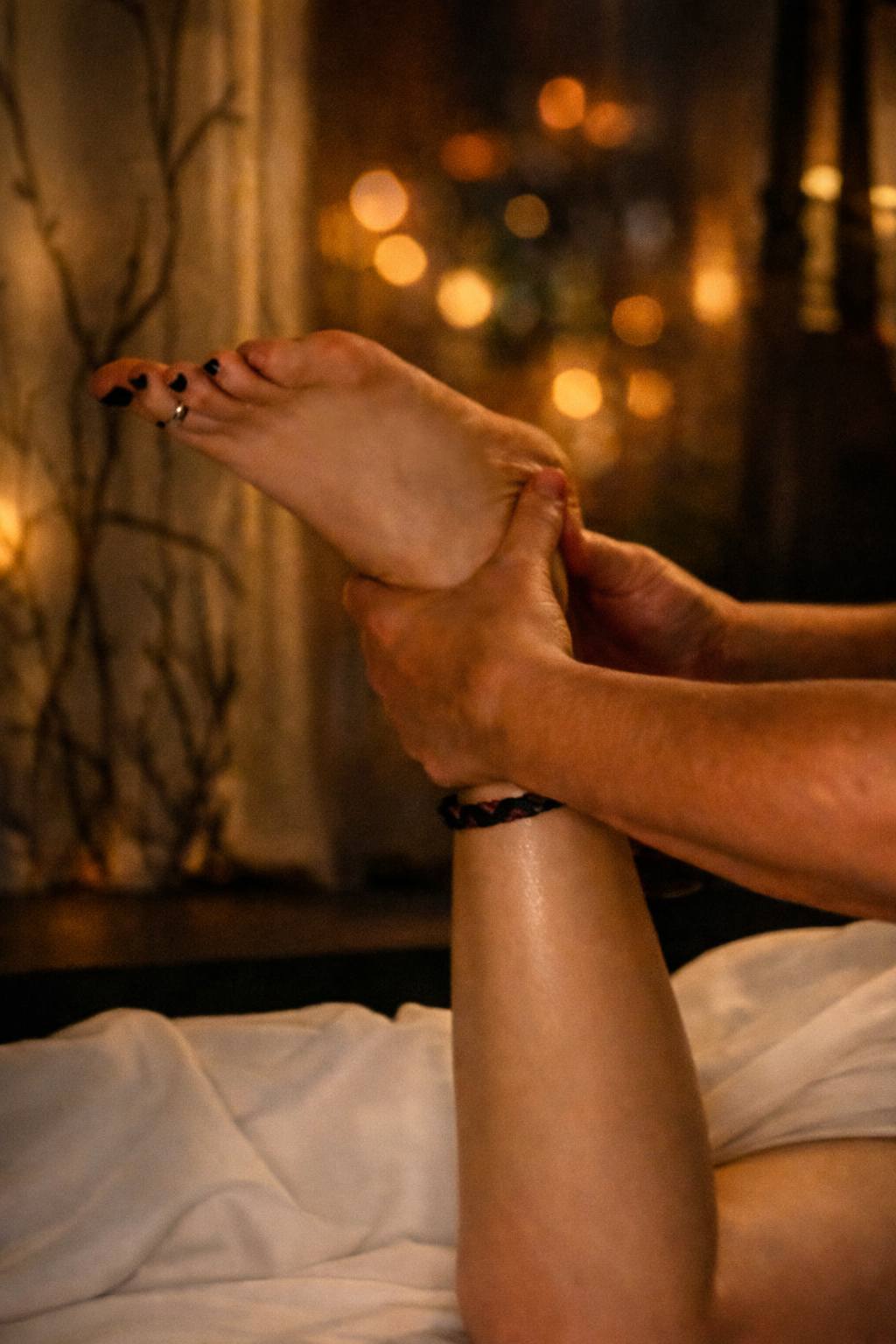
Therapeutic massage may help address calf tightness as part of a larger lower-body pattern involving the feet, ankles, hips, and low back.
Precision therapeutic massage therapy can often help reduce muscular tension patterns associated with prolonged sitting and reduced movement throughout the day.
At Key of Life Wellness and Massage, lower-leg tension is usually approached by looking at the bigger movement pattern instead of treating the calves as an isolated problem. The goal is to understand why the calves, ankles, feet, hips, and low back may all be reacting together. Rather than focusing only on the calves themselves, treatment often works best when surrounding movement patterns are also addressed.
For new clients, that process begins during your first massage appointment, with additional time to discuss when the tightness occurs, what seems to aggravate it, and how work, exercise, and everyday movement may be contributing to the pattern.
In neuromuscular therapy sessions, I commonly assess how the calves interact with:
the feet and ankles
hamstrings
glutes
hip mobility
walking mechanics
surrounding postural muscles
Treatment may include:
calf and lower-leg treatment
mobility-focused therapeutic work
decompression approaches for the lower body
postural assessment
improving movement throughout the lower kinetic chain
In many cases, the painful or tight area is only one part of the overall pattern.
Small Desk-Worker Movement Habits That Can Help Tight Calves and Heavy Legs
One of the biggest things that helps many desk workers is simply staying in one position less often throughout the day.
Many people notice improvement from:
standing periodically
walking during breaks
moving the ankles and feet more often
reducing uninterrupted sitting time
improving desk ergonomics
increasing movement throughout the workday
Even small increases in movement can sometimes help reduce how stiff and compressed the lower body feels after long workdays.
When Calf Tightness Becomes Part of a Bigger Lower-Body Pattern

When your legs feel less heavy and stiff, it is easier to enjoy a walk, dinner plans, or a Friday evening out after a long workweek.
Calf tightness, leg fatigue, and lower-body stiffness are extremely common in people who spend long hours sitting, working at computers, or staying in static positions throughout the workday. If leg heaviness comes with significant swelling, redness, warmth, sudden pain, shortness of breath, or symptoms that feel unusual for your body, it is important to check with a medical provider before assuming the issue is muscular.
Over time, many people start noticing the discomfort spreading into multiple areas at once. The calves tighten, the hips feel stiff, the ankles become less mobile, and the lower body starts feeling heavy or restricted before the workweek is even over.
A lot of clients initially think they simply need to stretch more, but the body is often adapting to prolonged sitting patterns throughout the hips, pelvis, legs, and surrounding stabilizers at the same time.
Betsy Burkart, NCLMBT #7141, owner of Key of Life Wellness and Massage, specializes in helping clients identify and address the muscular compensation patterns that commonly develop from prolonged sitting, desk work, driving, and postural strain.
For clients dealing with calf tightness, heavy legs, or lower-body stiffness, treatment is usually most effective when the lower leg is viewed as part of a larger movement pattern. The calves may be the area that feels the tightest, but the ankles, feet, hamstrings, glutes, hips, and low back may all be contributing to how restricted the lower body feels.
When these areas stop moving well together, the body may begin compensating in ways that make the calves feel overworked, the ankles feel stiff, and the legs feel heavy or fatigued after long periods of sitting. For clients dealing with ongoing lower-body tightness, leg fatigue, and sitting-related tension, sessions are structured to support both immediate relief and longer-term improvement in movement and mobility.
If tight calves, heavy legs, or lower-body stiffness keep showing up after long workdays, massage can be a helpful place to start. Learn more about available massage packages or book a new client appointment to begin addressing the larger lower-body pattern behind the discomfort.