Can Massage Help Tennis or Golfer's Elbow Pain?

Elbow pain is not limited to the tennis court or golf course. It can build after repeated gripping, lifting, typing, mouse use, tool work, tattooing, cooking, or any activity that asks the wrist and forearm to perform the same motion again and again. Tennis elbow and golfer's elbow describe two different locations of tendon-related pain. Massage cannot diagnose or repair an injured tendon, but carefully planned work may help ease muscular tension in the forearm and make everyday movement feel more comfortable. The most useful approach begins by understanding where the discomfort is felt, what activities aggravate it, and whether the symptoms need medical evaluation first.
Tennis Elbow and Golfer's Elbow Are Not the Same Pattern
Tennis elbow, also called lateral epicondylitis, is generally felt along the outside of the elbow. It is associated with the forearm muscles and tendons involved in extending the wrist and fingers. Repeated gripping or wrist extension can make the area increasingly sensitive. Golfer's elbow, also called medial epicondylitis, is generally felt along the inside of the elbow. It involves the flexor-pronator group used when bending the wrist, gripping, and rotating the forearm. Neither condition requires participation in the sport named after it. The same patterns can appear in desk workers, hairstylists, massage therapists, tradespeople, musicians, weightlifters, and others whose hands and forearms carry a repetitive workload.
Why the Forearm Matters When the Elbow Hurts
Many of the muscles that move the wrist and fingers begin near the elbow. This means a client may feel the problem at the tendon attachment even when much of the muscular workload is spread through the forearm.
A thorough massage session may therefore include the forearm, upper arm, shoulder, and neck instead of concentrating pressure directly on the painful point. Betsy also looks at how the client grips, works, trains, and positions the arm throughout the day. The goal is not to force an irritated area. It is to reduce unnecessary muscular effort around the pattern and help the client move with greater comfort.
Where Massage May Fit
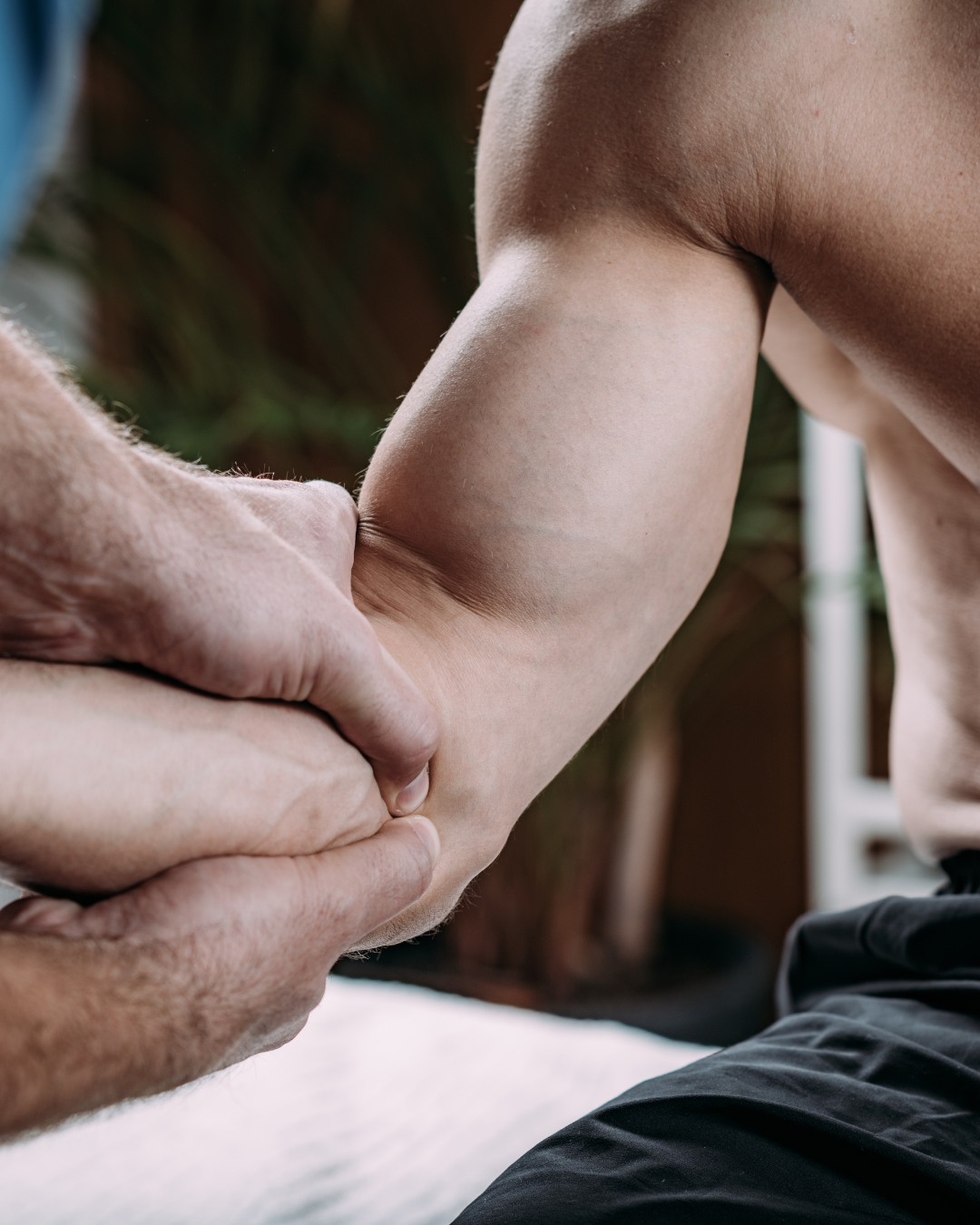
Massage may be useful when muscular tightness, fatigue, or repetitive use accompanies elbow discomfort. Techniques can be adjusted to address the wrist flexors or extensors, the muscles that rotate the forearm, and tension higher in the arm and shoulder.
Pressure should remain appropriate for the irritability of the area. More intensity is not automatically more effective, especially when a tendon attachment is already sensitive. In some sessions, working around the area and helping the rest of the upper body settle may be more appropriate than applying direct pressure at the elbow.
Massage is best viewed as one part of a broader plan. Activity modification and exercises recommended by a physical therapist or other qualified clinician may be important when symptoms persist.
When Elbow Pain Should Be Evaluated First
New pain after a fall or sudden injury, marked swelling, loss of strength, numbness or tingling, symptoms that travel from the neck, or pain that continues to worsen should be evaluated by an appropriate health care professional. A diagnosis matters because tendon irritation, joint conditions, and nerve involvement can create overlapping symptoms.
Massage should not be used to delay evaluation when the source of the pain is unclear. Once serious concerns have been ruled out, therapeutic massage can be coordinated with the client's medical or rehabilitation plan.
A Session Built Around Your Actual Activity
Betsy Burkart, NCLMBT #7141, has more than 20 years of experience helping clients manage muscular pain and repetitive-strain patterns. The first appointment includes time to discuss what you do, when the discomfort appears, what movements have changed, and what care you may already be receiving.
The session may combine neuromuscular therapy, focused forearm work, deep tissue techniques, myofascial work, or broader massage for the shoulders and upper body. You do not need to choose the perfect modality before booking. The plan is customized after the conversation and adjusted to the way your body responds that day.

Ready to Get Started?
If elbow or forearm discomfort is connected to work, training, or repetitive activity, a new client appointment provides time to discuss the full pattern before hands-on work begins. Book online to begin with an individualized plan.